Bean History
Harvesting
Coffee is almost exclusively hand-picked, ensuring that only ripe cherries are harvested while unripe ones are left for later passes. To ensure optimal ripeness, workers make multiple passes, often up to 5–6 rounds over several weeks. The harvest period occurs from mid-November to mid-January. These heirloom varieties, such as Kurume, Dago, and Wolisho, are grown organically under natural forest canopies of shade trees like Enset, Albizia, and Acacia.
Sorting
Meticulous cherry sorting is conducted to ensure that only the ripest beans are processed. This quality is further assured through the “Zero Defect Cherry Picking” initiative, which provides farmers with training and financial incentives for selecting only ripe cherries. After selective hand-picking and pulping, the beans are sorted by density in water channels to maintain the precision required for Grade 1 specialty coffee.
Processing
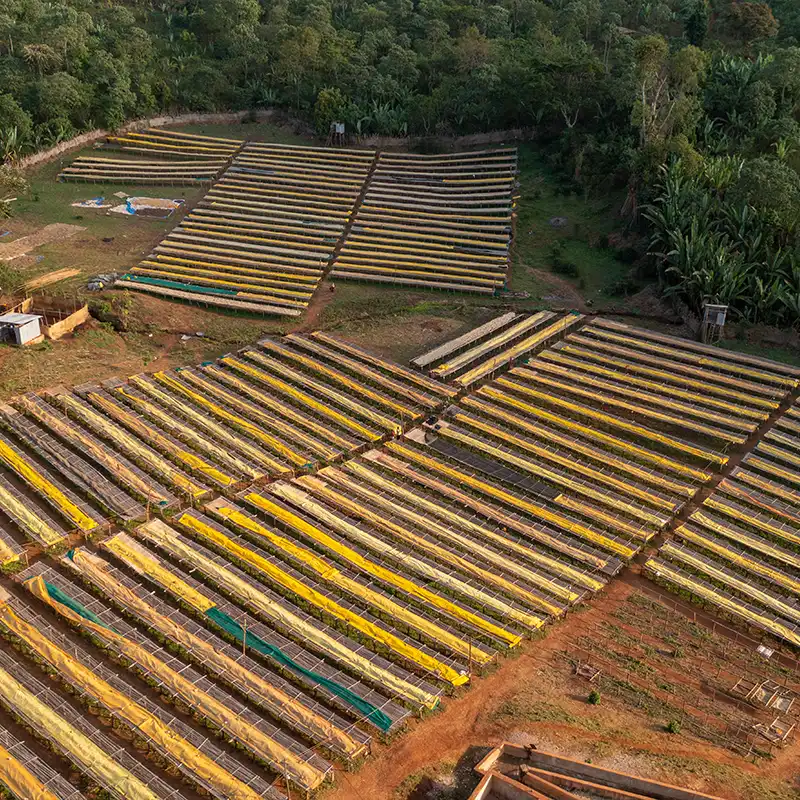
After the ripe cherries are pulped, they are fermented in water for 24–48 hours to break down the mucilage. The beans are then thoroughly washed in clean water to halt fermentation and spread on raised drying beds for 7–10 days. They are turned regularly to ensure even drying and prevent mold until the parchment reaches 11–12% moisture. Finally, the coffee is hulled, sorted by size and density, and graded for quality before being bagged for export.