Bean History
Harvesting
The harvest takes place from October to mid-December in the premier coffee-producing district of Limu Kossa. Coffee trees are intensively grown on large farms or near homesteads, shaded by indigenous trees like Enset, Albizia, and Acacia. Smallholder farmers perform careful hand-picking to ensure only ripe cherries are delivered to the processing site, allowing unripe fruit to remain on the tree until they reach optimal maturity.
Sorting
Immediately upon delivery, the ripe cherries are sorted from any unripe ones by hand to ensure only the highest quality fruit enters the processing stream. This rigorous manual sorting is a key part of our “Zero Defect” approach, eliminating the risk of commingling and maintaining the integrity of each specific lot. After pulping, the parchment is further graded by density and size into three distinct categories to ensure a uniform and consistent final product.
Processing
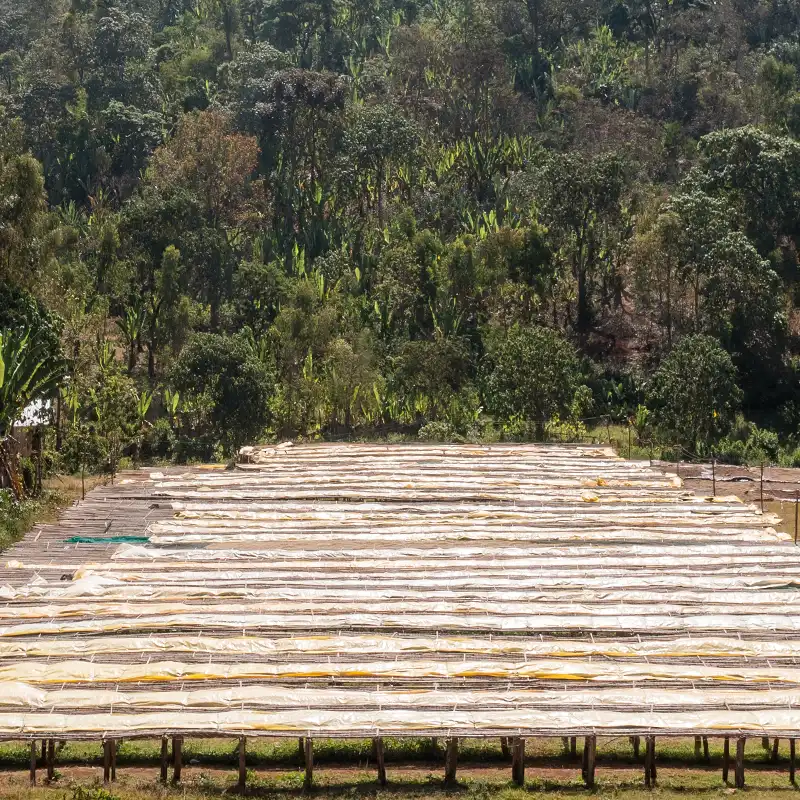
We utilize a disc pulper and a biological fermentation technique to remove mucilage, with the beans soaking underwater for 24 to 48 hours. Sun drying is the preferred method, utilizing raised beds to harness solar energy. The parchment undergoes fast “skin drying” to remove surface water before completing the full drying process, which takes 7 to 9 days. This continues until the beans reach a precise moisture content of 10–12%, preserving a profile noted for winey, fruity, and floral aromas with green tea-like acidity.