Bean History
Harvesting
The harvest takes place from November to January, a period when cherries reach their peak ripeness. Harvesting is done exclusively by hand, with workers carefully selecting only the deep red cherries while leaving green or under-ripe fruit on the branches to mature for later passes. This labor-intensive process ensures that the foundation of the natural profile consists only of fruit with the highest sugar content.
Sorting & Processing
Once the cherries are harvested, they undergo a meticulous manual sorting process to remove any remaining under-ripe or over-ripe fruit before they are laid out for drying. This high level of care is supported by the “Zero Defect Cherry Picking” initiative, which provides training and financial incentives to farmers for maintaining strict quality standards. Such rigorous sorting ensures that only the most uniform and defect-free cherries proceed to the next stage.
Drying
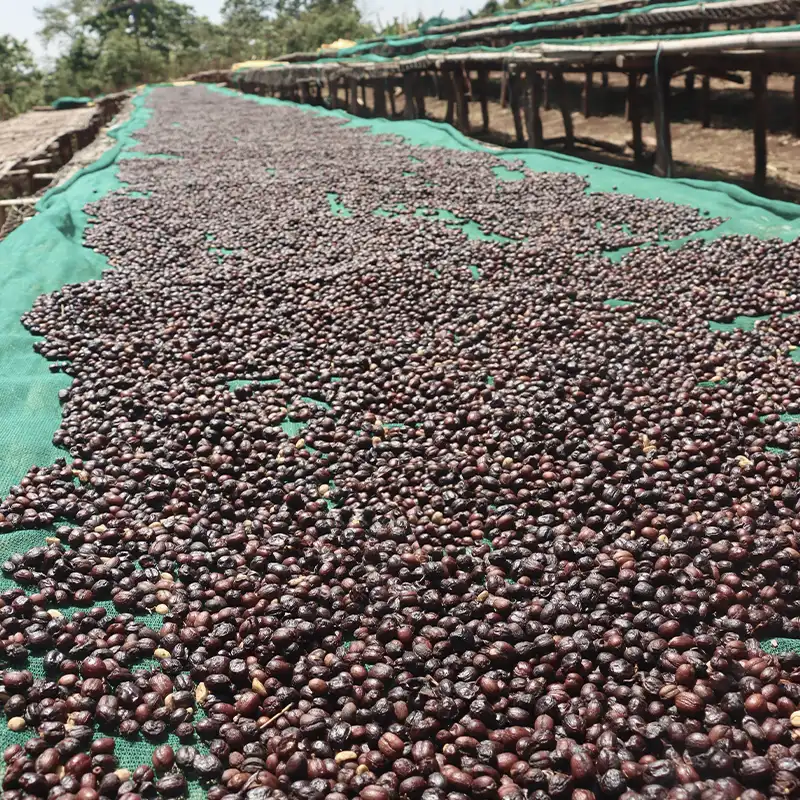
Sun drying is the traditional and preferred technique, with cherries spread in thin layers on raised African beds. The drying process typically lasts between 12 to 15 days, though the exact duration is heavily influenced by natural atmospheric factors such as wind, cloud cover, and sunlight. The cherries are turned regularly until they reach a precise moisture content of 10–12%, resulting in a cup characterized by bright acidity, vanilla notes, and a creamy, oily mouthfeel.